How to Not NOT Do Things
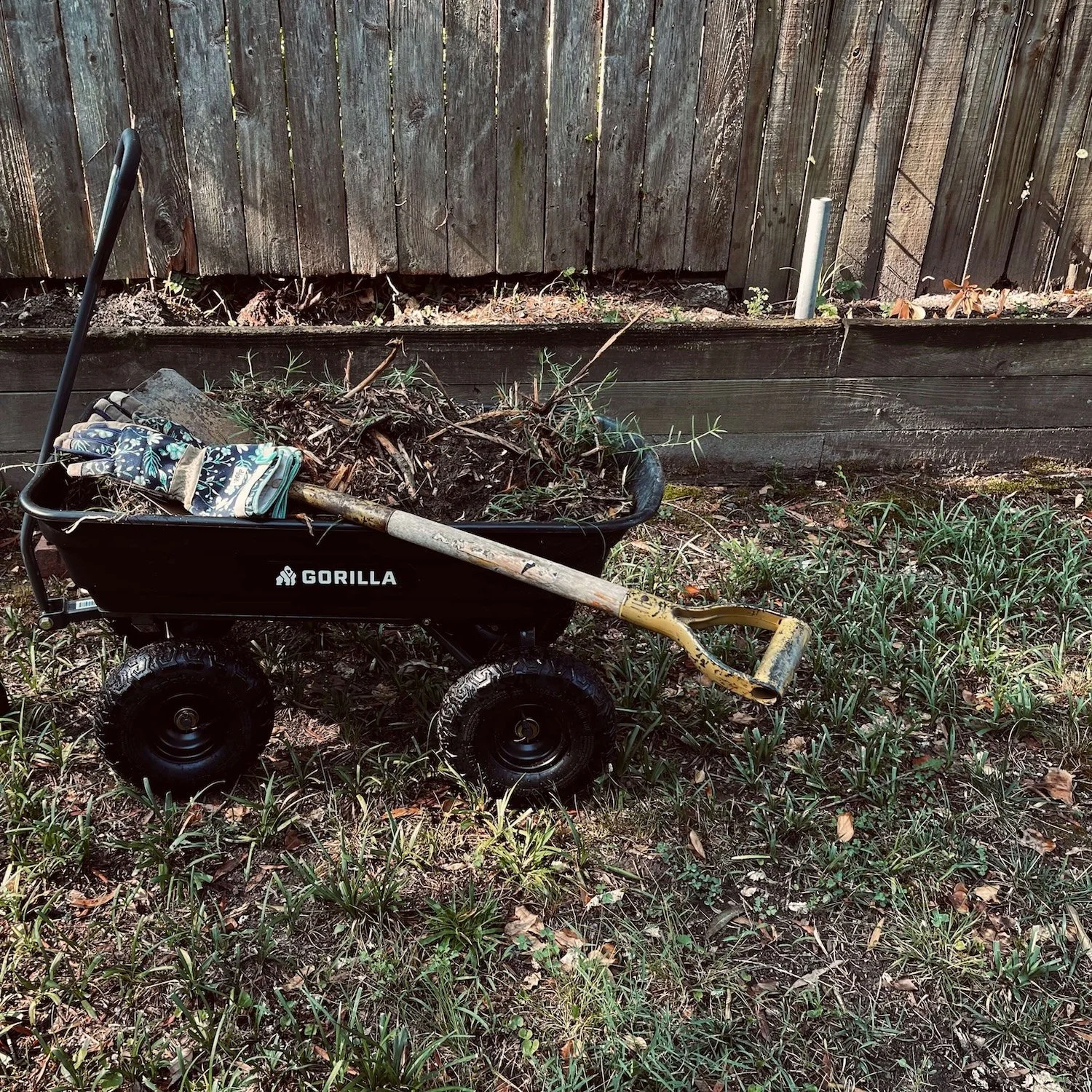
Doing things in the backyard.
As someone with an active mind and a near-infinite capacity to just sit, I need structure. I didn’t have much time to think about that after I retired from my job. The final months in Garden City were spent planning our cross-country journey, dealing with our possessions, and getting our home ready to sell. Once we arrived in Apex, I spent a lot of time researching places to visit on our trip to Spain and what to pack in my one bag. In both Idaho and North Carolina, we hung out with people we cared about before departing. In Spain, well, we were in Spain. Sigh. Now that we’re settling in somewhere, it’s time to think about structure again.
Before I retired I was definitely a planner. I used both digital and paper calendars. I even color coded my work calendar with blocks for job responsibilities (scholarship, teaching, service, program administration) to make sure I allocated my time according to my actual workload requirements. I may have owned my calendar back then, but my time wasn’t really my own. Now, I have complete calendar autonomy. It’s nice but also lacks that structure I need. I’m experimenting with using blocks similarly to how I used them as a professor. Time is marked for a particular category of activity, but nothing is scheduled, unless I have an appointment.
Finding a new rhythm
Here’s what I’ve been trying for a couple of weeks now.
01 / Walk & Garden (8:00 am - 9:30 am) - During this part of the day, James and I take a walk, usually in the cemetery near our house, and then “walk the property,” which entails checking on the gardens and house exterior, watering as needed, and occasionally chasing a groundhog out of the yard. You know, the usual.
02 / Transition & Cowork (9:30 am - 10:15 am) - This gives James and I a chance to do any planning we might need to do together and to freshen up for the day.
03 / Out & About (10:15 am - Noon) - This is for what my dad would call the mess around. During this time we run errands or do things that are away from home.
04 / Lunch (Noon - 1:00 pm) - This is a holdover from the pandemic. We both started working from home, and it became tradition to take a break at noon and have lunch together. My office was on the third floor, James’s on the first. The kitchen was on the second. We’d meet in the middle every weekday. It was a nice bit of normalcy that kept us both sane (and from working all day).
05 / Creative Time (1:00 pm - 2:45 pm) — This is my time to do something creative. So far I’ve spent this time working on this website and/or writing. It was really important for me to carve out time specifically for this because I want to make things but have a hard time getting started. The perfect has often got in the way of the good for me, I’m afraid.
06 / Pick Up (2:45 pm - 3:45 pm) — Time to straighten, clean, and tend to the house interior.
07 / Free (3:45 pm - onward) — This is usually when I read, maybe take care of a longer cleaning project, sit in the shade on the back deck, watch TV, hang out.
This approach is working well so far. It’s also incredibly flexible to think about time this way. For example, this week we’ve been working on the interior of the shed. It’s hot out, so we walked the property each morning and then got to work. If it was cool in the evening (and we weren’t exhausted) we’d take an evening constitutional. I had a zoom call with a grad school friend during out-and-about time yesterday. We didn’t need to run any errands anyway.
There are some things missing, of course. I’ll eventually find something I want to get involved with in the community. There’s no real time set aside for social activities. We’re going to join the Y next week; working out will need its place in the schedule. I’m definitely going to take a visual art class later this summer. It doesn’t really matter, though, because the purpose of this schedule isn’t to account for everything I do. The purpose is to provide focus.
The purpose of focus
Early retirement is a bit like being a professor in that I have a lot of unstructured time; in both instances the block schedule provides focus. As a professor, I had a lot of demands on my time and an immense curiosity for a diverse set of interests. Blocking off my time served as a tool for reconciling what I needed to take care of with what I wanted to do. It became a way to say no to myself and others when something important or interesting didn’t fit with my focus at the time. It didn’t always work (I’m a helper and definitely spent time pitching in when I should have been TCing my own B), but it helped. As an early retiree, I have fewer demands on my time but no less curiosity. For me, that can be a real challenge (see previous: perfect vs. good). I’m using this loose schedule as a way to not not do things. Blocking out time for writing or taking a walk, for example, is a gentle way to force myself to do something that I want to do anyway.
Oddly enough, I think the block schedule will become less necessary as I have more to do. There will come a time when my days are more organic. That’s kind of the dream of retirement for me, following whims, luxuriating with a book, occasionally day drinking. I’m easing myself into it.